What if a diesel engine’s sudden loss of power doesn’t point to one failed part, but to several systems that can create the same symptom? If you’re looking up diesel engine losing power causes, you’re likely trying to decide whether it’s safe to keep driving or whether a warning light signals a serious problem. Fuel delivery, air intake, turbocharging, and exhaust systems can all affect performance, and their symptoms can overlap.
Knowing what may be behind the power loss can help you recognize warning signs and choose a sensible next step. This guide explains common causes, what symptoms may suggest, and when prompt professional diagnosis is the safer choice.
A drop in power alone doesn’t confirm which part has failed. A check engine light, unusual smoke, rough running, or a change in when the problem occurs can provide useful clues, but testing helps distinguish one system from another. On Top Diesel & Automotive’s ASE-certified technicians use diesel diagnostics to investigate performance concerns and explain appropriate next steps. Before an inspection, note when the power loss began, the driving conditions, and anything else that changed.
Key Takeaways
- Diesel engine losing power causes can involve fuel, air, exhaust, turbocharging, or engine-control systems. Reduced power alone doesn’t identify a failed part.
- Note whether the change is gradual or sudden, and record any warning lights, smoke, or unusual running to help narrow down the concern.
- Inspection, scan data, and targeted testing can help technicians distinguish between causes that produce similar symptoms.
- If power loss makes it difficult to keep pace or control the vehicle, stop somewhere safe and arrange diagnosis.
- Sharing when the issue began and the conditions around it can help technicians assess the vehicle and explain appropriate next steps.
Diesel engine losing power: which systems can cause it?
A diesel engine can lose power for several reasons, and reduced performance alone doesn’t identify a failed part. Diesel-engine power loss is a symptom, not a diagnosis. Fuel, air, exhaust, turbocharging, or engine-control problems can all affect how the engine responds. These systems work together, as the overview of Diesel engine operation explains, so a fault in one area can sometimes feel like a problem somewhere else.
Common groups of possible causes include:
- Fuel delivery: A restricted filter or another supply problem may limit fuel reaching the engine. If the loss is more noticeable under load, fuel supply is one system a technician may assess.
- Intake air: A blocked intake or leak can interfere with the air available for combustion.
- Exhaust flow: A restriction in the exhaust or after-treatment system may affect engine performance.
- Turbocharging: A boost leak or turbocharger concern may reduce the air pressure the engine relies on.
- Engine controls: Sensors or control-system faults can affect how the engine manages fuel and airflow.
Fuel delivery problems that can reduce diesel power
Fuel filters help keep contaminants from reaching the engine, but a restricted filter or a problem elsewhere in the supply system may limit fuel flow. The engine may then struggle to deliver power, especially when more power is needed. Check the maintenance history for the last filter service, but don’t treat an overdue service or recent refueling as proof of the cause.
Injector concerns are another possibility, but a loss of power by itself doesn’t prove an injector has failed. Hard starting, rough running, or smoke can accompany fuel-related trouble, yet those signs can overlap with other faults. A technician can consider when the symptoms occur, inspect the relevant systems, and test rather than assume one part is responsible.
Airflow, turbocharger, and exhaust restrictions
The engine needs a steady supply of air as well as fuel. A restricted intake can reduce airflow, while a leak in the intake or boost system can prevent the engine from receiving the air pressure it expects. Either issue may show up as sluggish response, particularly during acceleration. A turbocharger problem can also reduce boost, but weak acceleration or unusual sounds alone aren’t enough to confirm turbocharger failure.
Exhaust flow matters too. A restriction, including one involving a diesel particulate filter (DPF), may affect performance, but the cause and significance depend on the vehicle and its warning indicators. Avoid assuming that a particular light or symptom means the filter needs replacement. Vehicle-specific checks help distinguish a restriction from related sensor or control concerns.
Engine-control systems add another layer. Sensors report operating conditions to the engine computer, which uses that information to manage performance. A faulty reading or control-system issue may change how the engine runs, sometimes alongside a warning light. The light is a useful clue, not a complete explanation. Scan information and physical checks help put it in context.
How serious the power loss is depends on the underlying fault, how the vehicle behaves, and its warning indicators. A gradual drop and a sudden change may point toward different lines of investigation, but neither identifies a failed component on its own. Diesel engine losing power causes can overlap, so testing the affected systems is more useful than guessing from one symptom.
Warning signs that help explain diesel engine power loss
A gradual loss of power can be easy to adapt to. You might notice that acceleration feels weaker over time or that the vehicle needs more effort to handle a familiar load. A sudden drop is harder to miss and may appear alongside a warning light, smoke, unusual sound, or rough running. Either pattern deserves attention. The timing can help narrow the investigation, but one symptom can have several possible causes , so it shouldn’t be treated as proof of a failed part.
Make a note of what changed and when. Did the loss start all at once, or build over several trips? Does it happen only during acceleration, on hills, or while carrying a load, or is it present at idle too? Diesel engines are used in a range of settings, as the U.S. Energy Information Administration describes in its overview of Applications of diesel engines. Sharing the conditions when performance changes can help a technician decide how to assess the concern.
What acceleration, load, and starting symptoms may suggest
Sluggish acceleration or weaker pulling power is a broad clue, not a diagnosis of turbocharger failure. A concern may become more noticeable when the engine is working harder, which gives technicians useful context and may help them reproduce the symptom during testing. Also report hard starting, longer cranking than usual, or an uneven idle. These details can help distinguish a concern that appears only under load from one affecting how the engine runs more generally.
Describe the conditions plainly rather than assigning a cause. For example, note whether the vehicle starts normally after sitting, whether the idle settles, and whether acceleration changes as the engine warms. Avoid deliberately pushing the vehicle to recreate a problem if doing so feels unsafe.
Warning lights, smoke, and unusual engine behavior
Record which dashboard lights appear, when they come on, and whether they stay on, go out, or return later. If you can, note any message displayed. A warning light can point the inspection toward a system, but its meaning depends on the vehicle and should be considered alongside other findings. For more detail about possible warning-light explanations, see this guide to diesel check engine light causes.
Smoke color and timing can add context, but neither identifies a failed component on its own. Note whether smoke appears during startup, acceleration, or steady operation, and whether it’s occasional or ongoing. Mention new rattling, whining, knocking, or other sounds, along with rough running or vibration. Don’t put yourself in harm’s way to inspect the vehicle. A clear description is more useful than trying to diagnose it yourself.
The more specific your observations, the better the starting point for professional testing. If the diesel engine losing power causes remain unclear or the symptoms persist, On Top Diesel & Automotive provides diesel diagnostics to assess the vehicle and explain the next steps.
How technicians narrow down diesel engine power loss causes
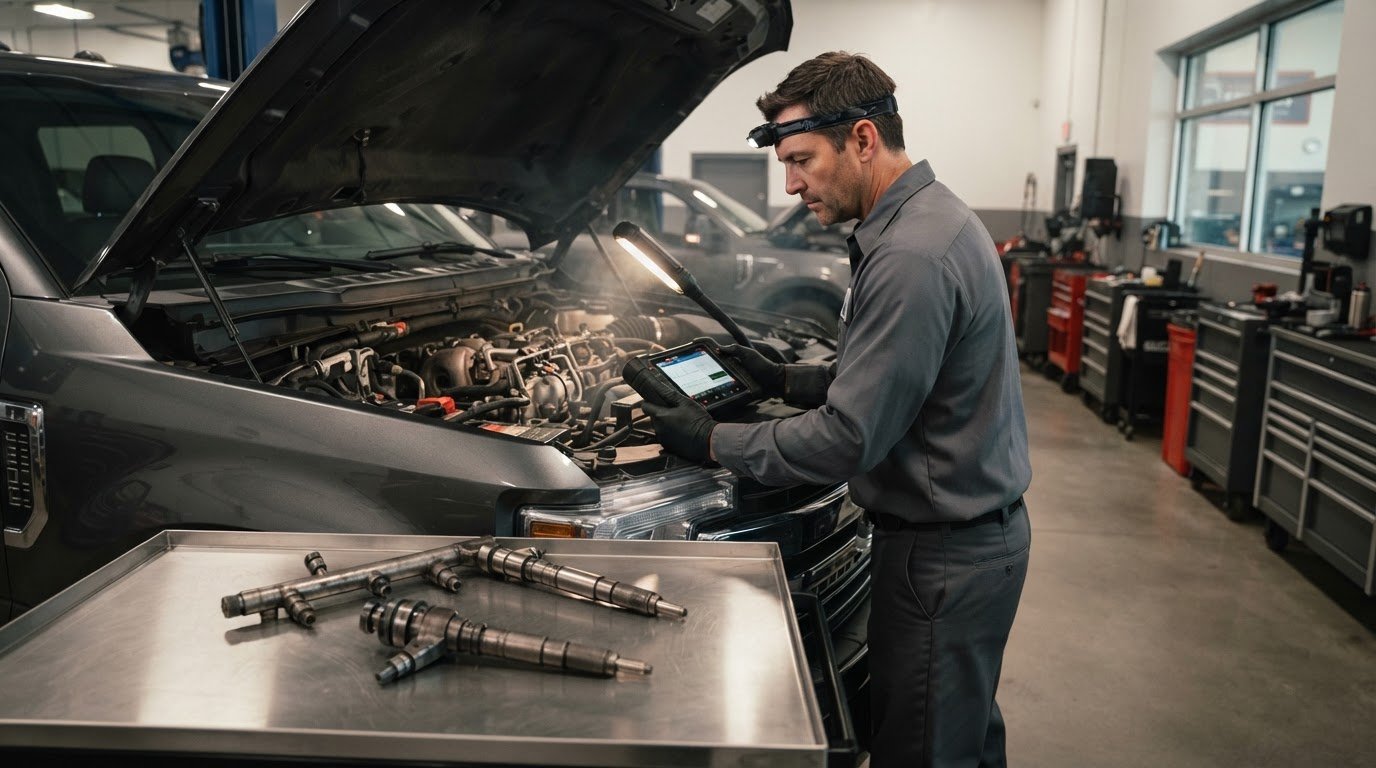
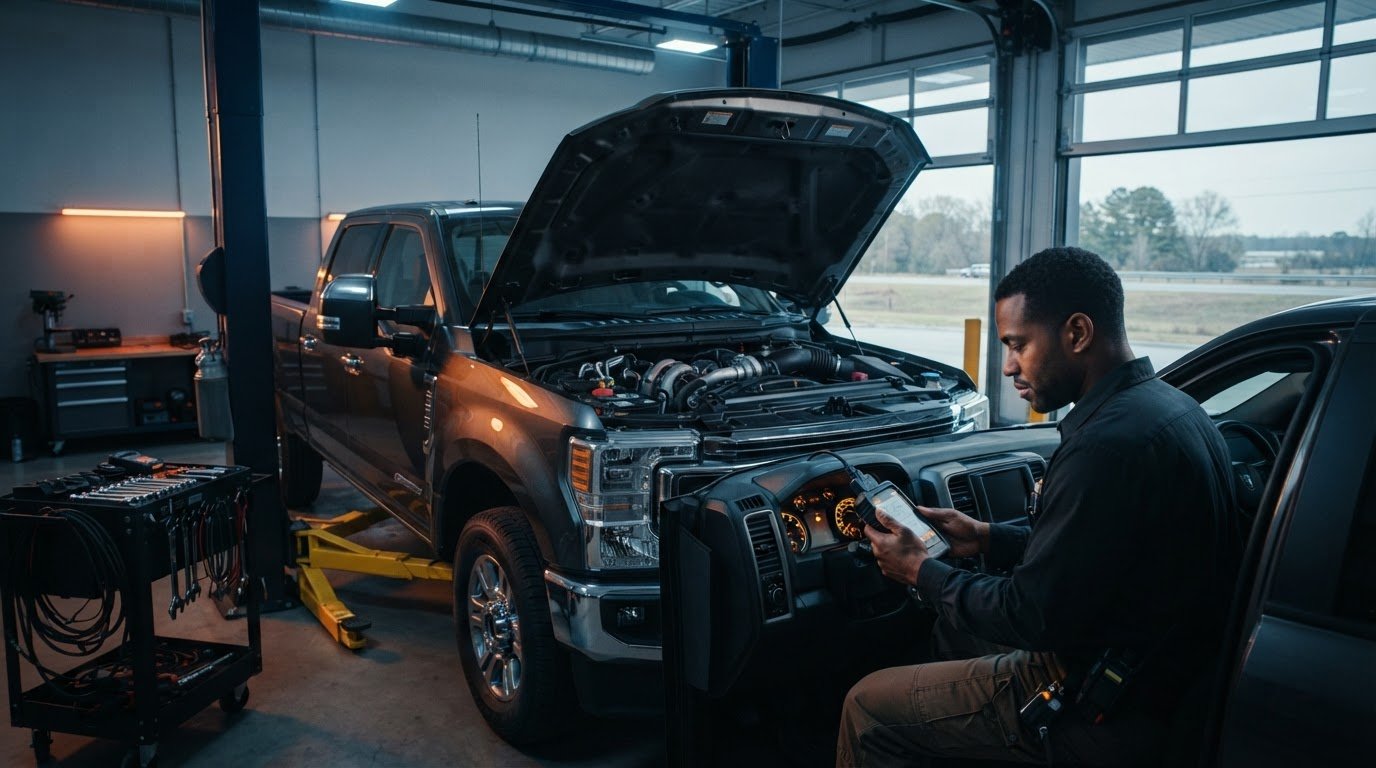
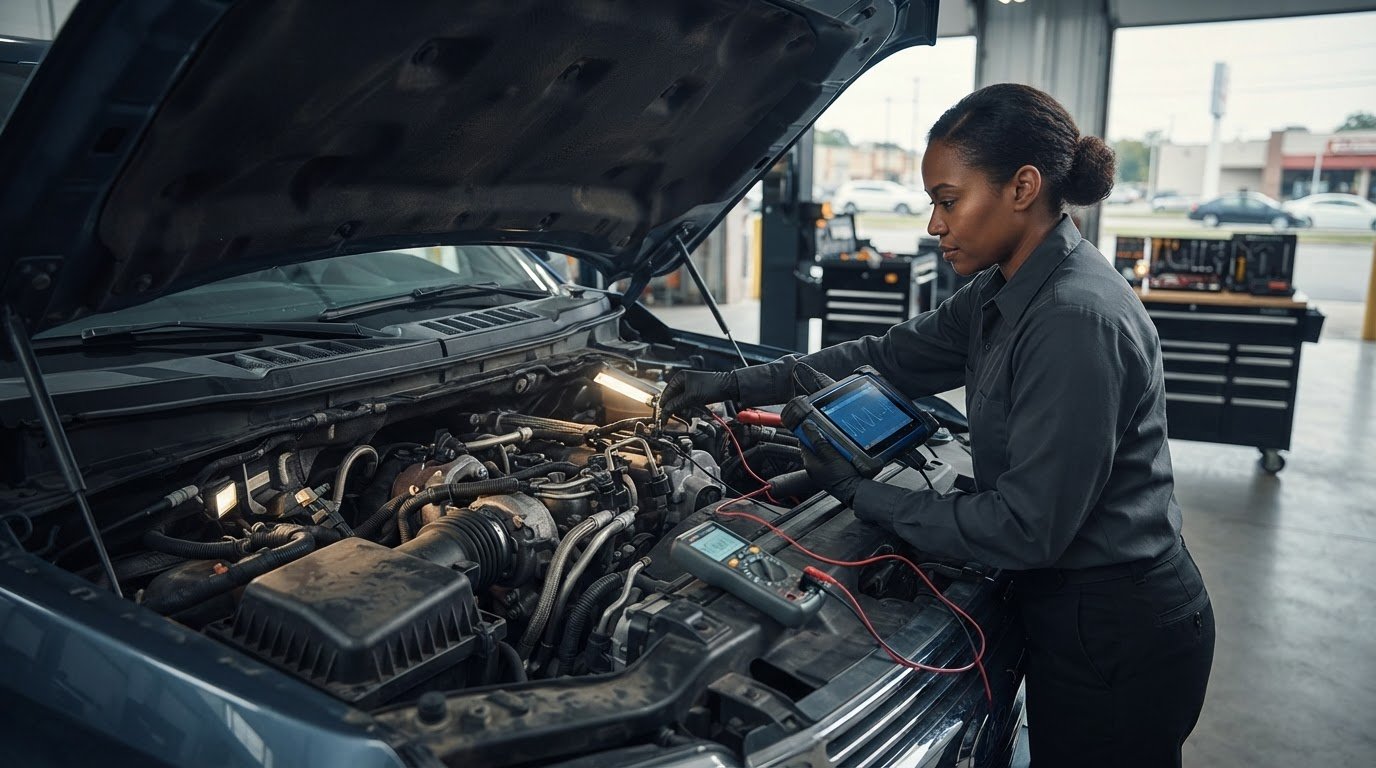
Finding the source of reduced power takes more than matching one symptom to one part. A technician combines the driver’s description with a visual inspection, scan data, and targeted tests. Each step helps narrow the possibilities. For example, a warning light may direct attention to a system, while inspection and testing help determine whether the concern comes from a sensor, wiring, a restriction, or another fault.
On Top Diesel & Automotive’s ASE-certified technicians use diesel diagnostics to investigate performance concerns and explain appropriate next steps. The vehicle’s history matters too. When did the change begin? Does it happen under load, at startup, or at different times? Those details help guide the inspection and may help reproduce the problem.
Why fault codes are clues, not a complete diagnosis
A diagnostic trouble code records a condition the vehicle’s control system has detected. It can point toward a circuit or operating concern, but it doesn’t automatically identify the failed part or explain the root cause. A sensor reading, for instance, may be affected by the sensor itself, its wiring, or another condition in the system. Some mechanical concerns also need hands-on inspection or testing beyond a code scan.
That’s why a code should be checked against what the vehicle is doing and what the technician finds. A fuller explanation of the process is available in this diesel engine diagnostics guide.
Comparing symptom patterns with possible systems
The table below shows how observations can guide an inspection. These are starting points, not diagnoses. Vehicle make, model, engine, and operating conditions all affect how a symptom or scan result should be interpreted.
| Observed symptom | Possible system | Diagnostic caveat |
|---|---|---|
| Power fades during acceleration or under load | Fuel delivery | A restricted supply is one possibility; testing is needed to assess fuel flow and related conditions. |
| Weak response or reduced pulling power | Intake air or boost | A restriction or leak may be considered, but the symptom alone doesn’t confirm a turbocharger fault. |
| Reduced power with an exhaust-related warning | Exhaust or after-treatment system | Warning information and vehicle-specific checks help assess whether a restriction or another issue is involved. The California Air Resources Board provides general Diesel Particulate Filter (DPF) Maintenance information. |
| Power change alongside an engine warning light | Engine-control system | A code helps direct further checks; it doesn’t prove a particular sensor or component has failed. |
Once inspection and test results point to a cause, the technician can explain the findings and discuss an appropriate repair recommendation. If power loss continues or the cause is uncertain, diesel diagnostics at On Top Diesel & Automotive can help assess the concern.
What to do when a diesel engine starts losing power
A power drop can be unsettling, especially if you’re unsure whether the vehicle can keep moving safely. Focus first on your surroundings and the way the vehicle responds. Diesel engine losing power causes can vary, so avoid trying to diagnose a part while driving. Assess safety, note what the vehicle is doing, record relevant details, and arrange a professional diagnosis.
- Assess safety. If reduced power makes it difficult to keep pace with traffic or control the vehicle, move to a safe place and stop.
- Observe warning signs. Note dashboard lights, messages, smoke, unusual sounds, overheating, or rough running.
- Record conditions. When did the symptoms begin, and do they change with load, speed, temperature, or fuel level?
- Arrange diagnosis. Share your observations and follow the vehicle’s warnings and owner’s manual.
When to stop driving and seek prompt help
Stop in a safe place if the engine has severe power loss, is overheating, produces heavy smoke, or makes abnormal noises. These signs call for prompt attention, but they don’t identify the cause by themselves. Follow any dashboard warnings and the guidance in your owner’s manual. Don’t assume the vehicle is safe to drive based only on the fact that it still runs.
If stopping immediately would be unsafe, prioritize reaching a safer place without taking unnecessary risks. Avoid continuing a trip through severe symptoms or trying to push the engine harder to see whether the problem clears. A professional inspection can help determine what should happen next.
What details to share during a diagnostic visit
A clear timeline is useful. Note when the power loss first appeared, whether it came on suddenly or gradually, and whether it has become more frequent or severe. Record any warning lights or messages, smoke, noises, hard starting, rough idle, or changes in how the engine responds. Mention recent maintenance, a change in fuel, and whether the vehicle was towing or carrying a heavier load.
Conditions can offer helpful clues. Tell the technician whether the issue happens at a particular speed, during acceleration, on an incline, while towing, or after the engine has warmed up. If it appears at a certain fuel level or in particular weather, include that too. Don’t recreate a concerning symptom if doing so could put you or others at risk. A written note or photo of a dashboard message can help you remember details during the visit.
Share what you observed rather than guessing at a failed component. On Top Diesel & Automotive’s ASE-certified technicians use your account alongside inspection findings and diagnostic testing to investigate performance concerns and explain appropriate next steps. Arrange diesel diagnostics to have the power loss assessed.
Professional diesel diagnosis can identify the cause behind lost power
Several faults can produce similar changes in engine power, so the next step is to check the vehicle rather than guess at a part. A technician can use your description of the symptoms, the vehicle’s service history, inspection findings, scan data, and targeted tests to build a clearer picture. Each source of information adds context. A warning light or stored code may guide the investigation, while inspection and testing help determine whether the underlying concern involves a mechanical system, wiring, a sensor, or something else.
This process is specific to the vehicle and the way the concern appears. A symptom that happens only under load may call for different checks than one that’s present at idle or during startup. If you’ve noticed when the power loss occurs, sharing those details can help the technician focus the assessment.
What a diesel diagnostic inspection can establish
Diagnosis is a step-by-step process for checking likely systems and confirming what the evidence supports. A technician may compare scan information with an inspection and targeted tests, then explain what the findings do and don’t show. This helps distinguish a detected condition from its root cause and determine whether repair, maintenance, or further testing is appropriate.
The recommendation follows the confirmed findings and the vehicle’s needs. A diagnostic assessment doesn’t establish a particular outcome before the vehicle has been examined. The technician can explain what was found, what action is recommended, and how it fits the evidence.
When engine repair or replacement may be considered
Major engine work should follow inspection and supporting test results, not a power-loss symptom alone. Depending on the confirmed condition, the appropriate next step could involve addressing a specific fault, carrying out maintenance, or investigating further. A repair recommendation should reflect the vehicle and the evidence gathered during diagnosis.
If findings point to major engine work, complete engine replacement may be considered as an option where appropriate. It isn’t an automatic response to reduced power. On Top Diesel & Automotive’s ASE-certified technicians handle diesel diagnostics and engine work, and can explain the next steps based on what the inspection shows.
Understanding diesel engine losing power causes starts with finding out which system is involved and confirming the fault before deciding on a repair. If your vehicle’s power loss needs attention, schedule diesel diagnostic help with On Top Diesel & Automotive. A technician can assess the concern and discuss appropriate next steps based on the findings.
Take the next step with confidence
Unexplained power loss can make every drive feel uncertain. Rather than keep guessing at diesel engine losing power causes, use what you’ve noticed to start a focused conversation about the vehicle’s condition. A clear account of when the change began and how the engine behaves gives the diagnostic process a useful starting point.
On Top Diesel & Automotive’s ASE-certified technicians handle automotive and diesel service, including diesel diagnostics and engine repair. They can assess the concern and explain appropriate next steps based on their findings, without assuming a repair before the vehicle is inspected.
Schedule diesel diagnostic help to take a practical step toward understanding what your vehicle needs. A careful assessment can give you clearer information about the next steps.
Frequently Asked Questions
What is the most common cause of a diesel engine losing power?
A restricted fuel filter is one frequently cited cause, but there isn’t one cause that applies to every diesel vehicle. Problems with fuel supply, turbocharging, or exhaust after-treatment can also reduce performance. The diesel engine losing power causes depend on the vehicle and its symptoms. A filter’s service history may be relevant, but it doesn’t prove the filter is the source. Testing helps identify what’s actually affecting power.
Can a clogged diesel particulate filter cause loss of power?
Yes, a restricted diesel particulate filter (DPF) can be one possible reason for reduced power. Other exhaust or sensor concerns may produce similar signs, so a warning light alone doesn’t confirm that the filter is clogged. Note any dashboard message and changes in engine response, then have the system assessed using vehicle-specific checks. Avoid trying to force a cleaning process unless the owner’s manual directs you to do so for your vehicle.
Can bad diesel fuel make an engine lose power?
Yes. Fuel that’s contaminated or unsuitable for the vehicle can interfere with fuel delivery and engine performance. If the problem began soon after refueling, note where and when you filled up, and keep the receipt if available. Don’t assume the fuel is the cause, since filter, supply, or other engine issues can feel similar. A technician can use that timing as part of the investigation and determine which checks are appropriate.
Why does my diesel lose power when accelerating or climbing a hill?
Acceleration and hills place more demand on the engine, so a weakness that’s less noticeable during steady driving may become apparent. Fuel delivery, intake airflow, boost, exhaust flow, or engine controls may be considered. Note the road conditions, load, speed, and whether the engine was warm. Don’t repeatedly push the vehicle to reproduce the symptom if power loss makes driving feel unsafe.
Can a turbocharger problem cause a diesel engine to lose power?
Yes, a turbocharger concern or a leak in the boost system can reduce engine response. But sluggish acceleration doesn’t confirm turbocharger failure; other systems can produce similar symptoms. Note any change in sound, when the loss occurs, and whether it appears mainly under load. A technician can compare those observations with inspection findings and test results before recommending work, rather than replacing a turbo based on one symptom.
Is it safe to drive a diesel truck that has lost power?
It depends on how the truck is behaving, and safety can’t be confirmed without assessing the vehicle. If it can’t keep pace with traffic or respond reliably, pull over somewhere safe and seek help. Stop safely for severe power loss, overheating, heavy smoke, or abnormal noises, and follow dashboard warnings and the owner’s manual. Avoid towing or carrying a heavy load until the concern has been assessed.
Can a check engine light come on when a diesel loses power?
Yes. A check engine light may appear with power loss if the vehicle’s control system detects a condition that needs attention. The light doesn’t tell you by itself which component is faulty, and some performance concerns may need inspection beyond reading a code. Record whether the light stays on, flashes, or appears with a dashboard message, and share those details during diagnosis. Follow the owner’s manual for vehicle-specific warning guidance.
How do mechanics diagnose diesel engine power loss?
Mechanics combine the driver’s description with a vehicle inspection, scan information, and tests chosen for the symptoms. A scan code helps point the investigation toward a detected condition, but it doesn’t automatically name the failed part. For instance, a code involving a sensor circuit may call for checking connections and related system behavior. Vehicle make, model, engine, and operating conditions all matter when interpreting results and deciding on next steps.